
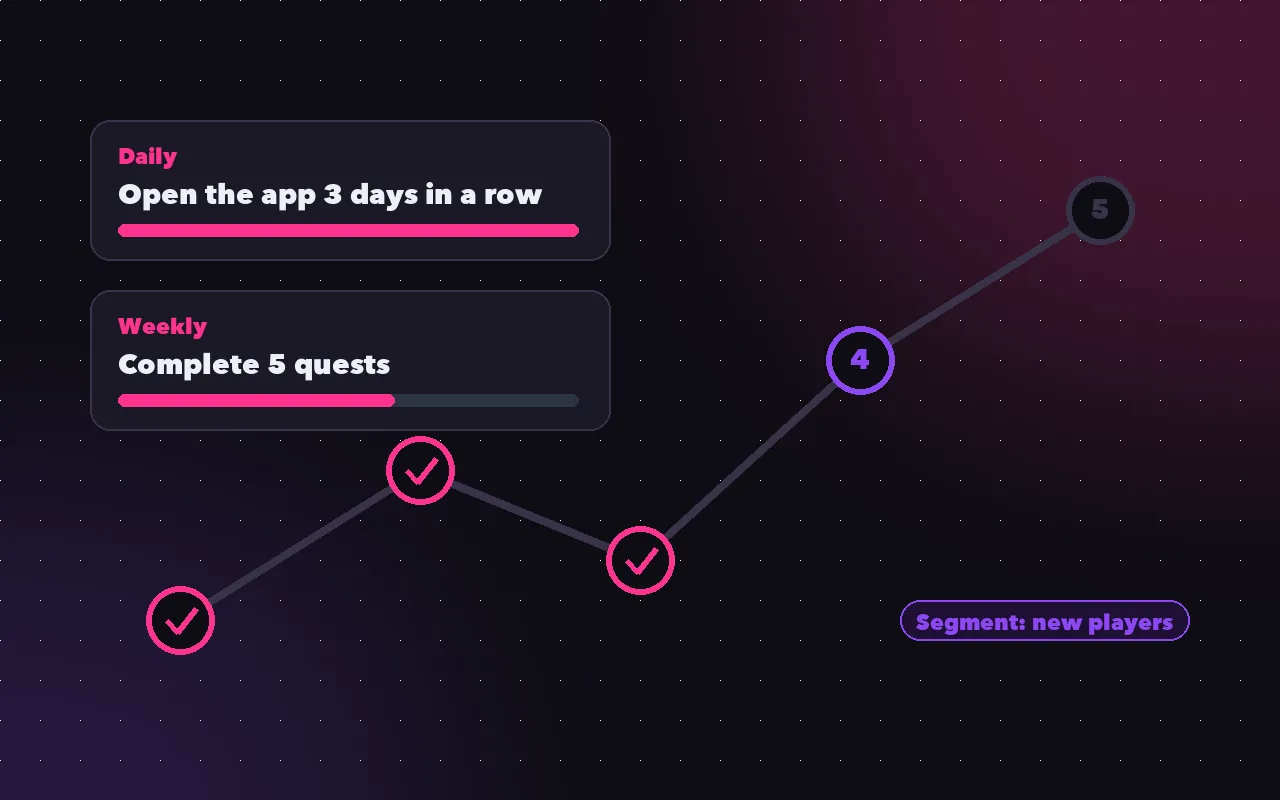
QuestFlow
Quests and challenges
Daily · weekly · seasonal
Rule builderTrueluck Bonus Hub builds the progression, loyalty and reward layer for gaming platforms and interactive apps. Quests, tiers, reward shops and seasonal events run from one central hub, and every release is judged by retention and lifetime value rather than by how busy the roadmap looks.
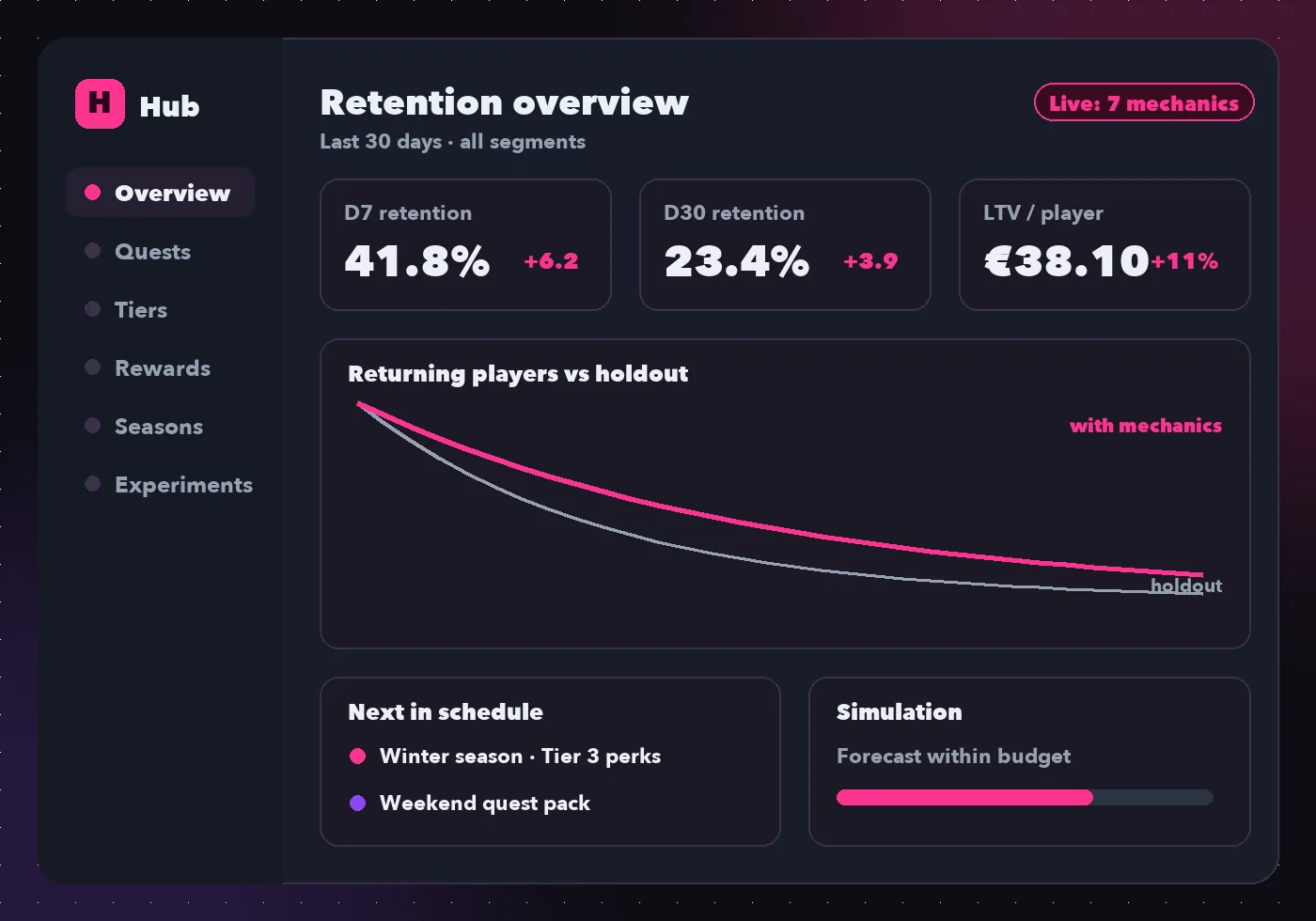
One team designs the incentive, models what it costs, ships it into your product and reports what it changed.
We read your cohorts before proposing anything. Where do players leave, which habits already exist, what does a returning player do differently? The result is a short list of mechanics worth building.
Tiers, point currencies, earn and spend rules, requalification periods. Everything is modelled in a costed plan your finance team can review before development begins.
Eligibility, limits, expiry and priority rules live in configuration, not in code. Your product team changes an incentive in minutes, and each change is logged.
Daily and weekly goals, seasonal passes and limited events that give players a reason to open the app tomorrow, built from reusable templates.
Each launch has a holdout group and an agreed decision date. Reports compare lifetime value against the control, not against last month.
Daily caps, cool-down periods and clear progress information are built in. Engagement should feel like progress, and good design never depends on pressure.
Quests and challenges
Daily · weekly · seasonal
Rule builder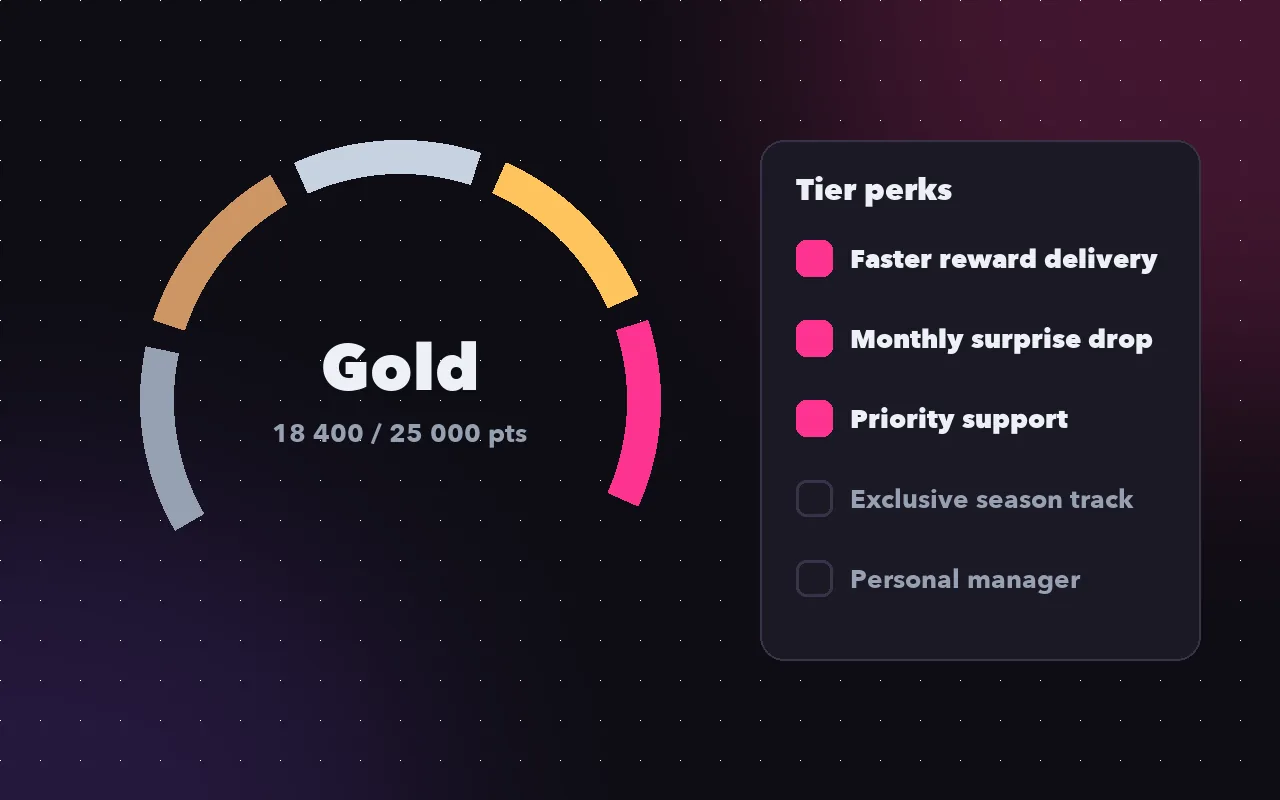
Loyalty tiers
Points · levels · requalification
Tier perks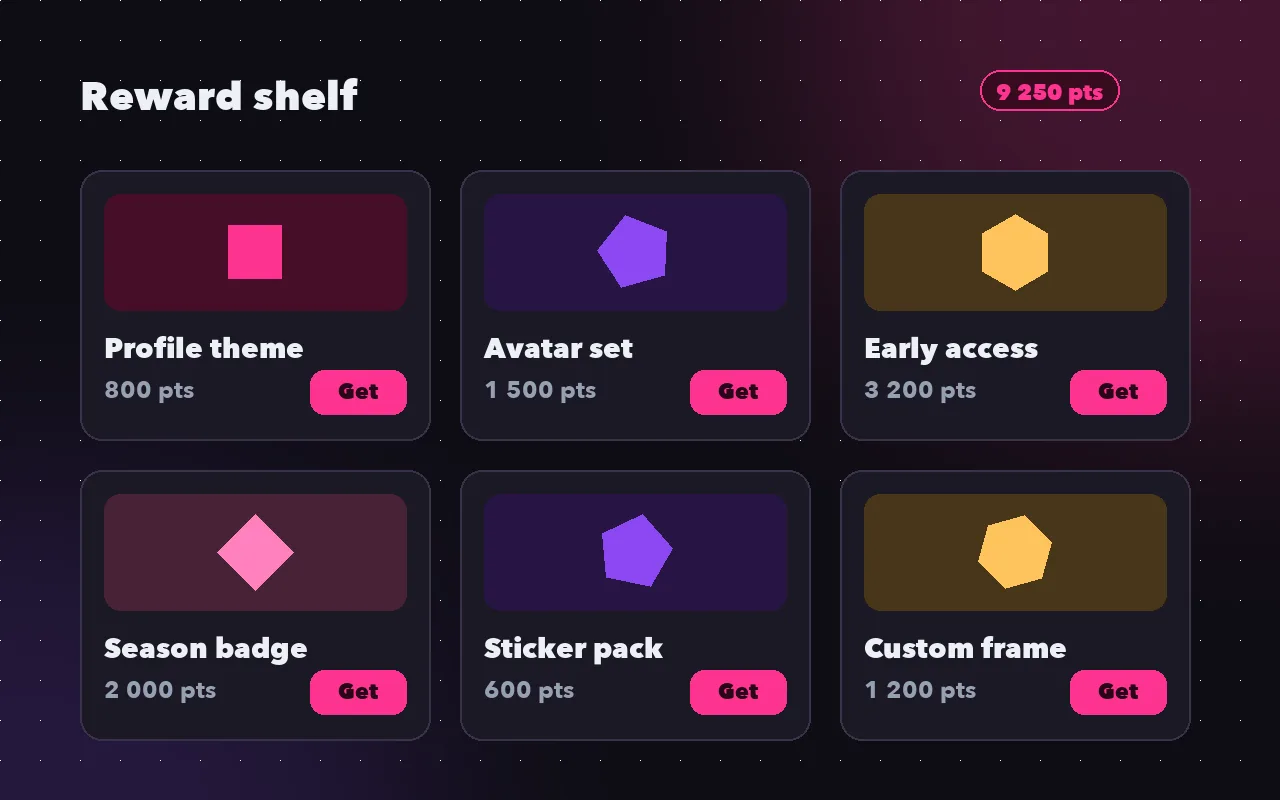
Reward shop
Catalogue · stock · redemption
Instant redemption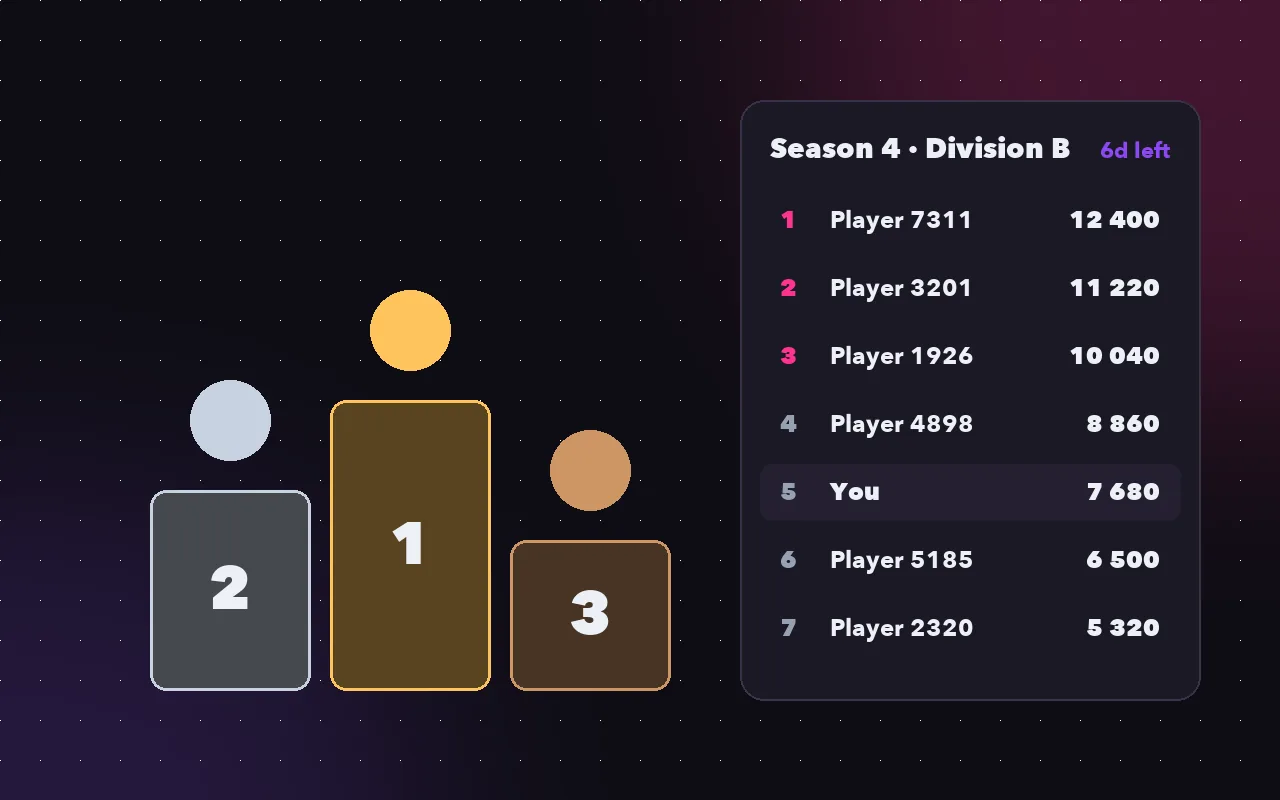
Leaderboards and seasons
Divisions · resets · fair play
Fair-play filters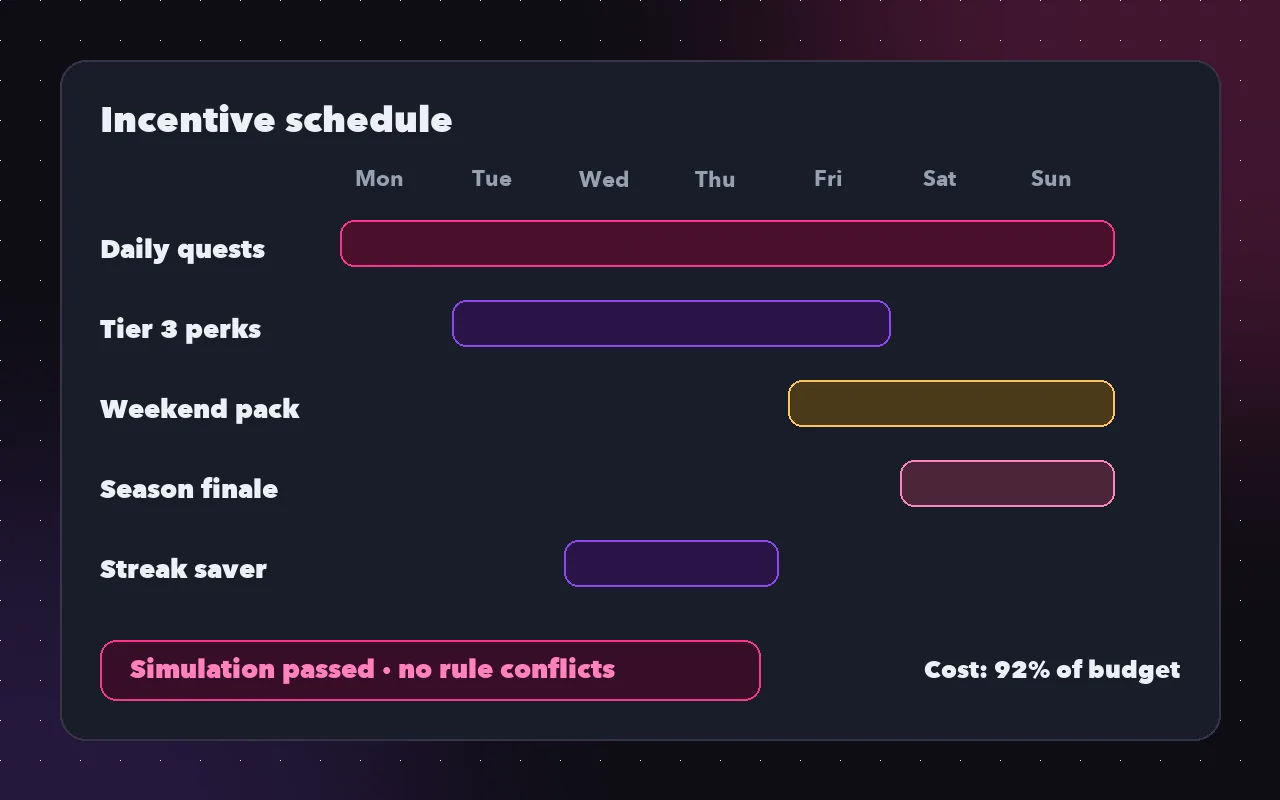
The central hub
Orchestration · forecasting
Plan · simulate · schedule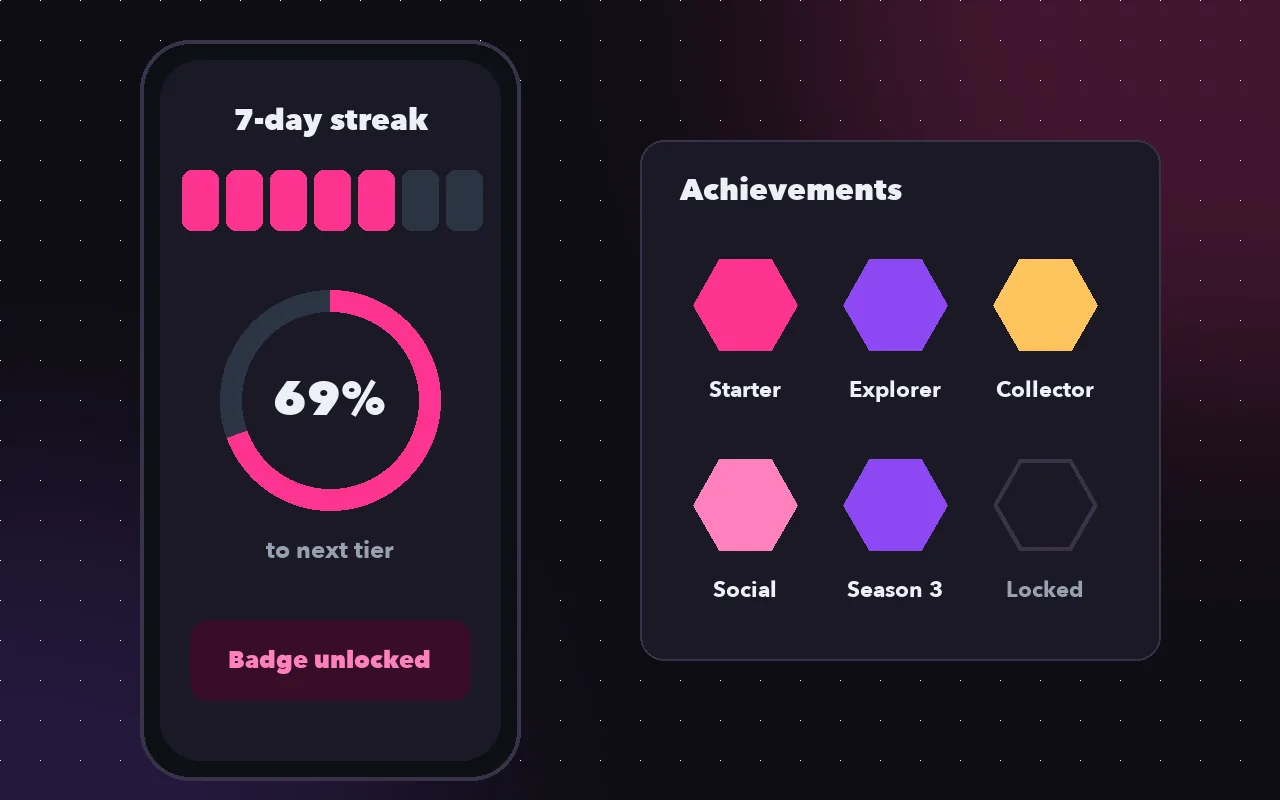
Engagement widgets
Web · iOS · Android
Themeable SDKWhy the hub
Reward programmes rarely fail because of one bad idea. They fail when quests, tiers, seasons and promotions are run from different spreadsheets and nobody sees the total. The hub is where all of them meet before players do.
Every incentive lives in one calendar with its audience, budget and owner.
Recent activity is replayed through new rules to show expected cost and conflicts.
Approved mechanics go live on time, by segment and time zone, without a release.
Holdout results and lifetime value are reported per mechanic, not per campaign.
Two weeks with your event data and current programme. We size the drop-off points and rank opportunities by expected impact.
Every proposed mechanic gets a cost model, a target metric and a review date. Nothing is built until you approve the plan.
Components are configured in the hub and connected through the API, event stream and SDK.
Before launch the hub replays recent activity through the new rules and shows the expected cost and any conflicts.
A holdout group stays outside the change. On the review date the mechanic is kept, tuned or switched off.
Start with a two-week retention review and get a prioritised plan backed by your own data.
In most cases, yes. We audit what is already live, keep the parts players value and replace the rest in stages, so nobody loses status or points during the switch.
You do. The hub reads events and issues rewards through your own systems. Player accounts never leave your infrastructure, and a full export is available on request.
We split the audience before launch. One group sees the new mechanic, a control group does not, and on the review date we look at the gap in returning players and revenue per player.
Usually four to ten weeks after the review, depending on how deep the integration goes.
Yes. Each component works on its own and connects to the hub later if you decide to expand.
Yes. Spending limits, pauses and clear progress screens are standard in every component, and each mechanic is reviewed against the client's own compliance rules. The operator keeps regulatory responsibility.